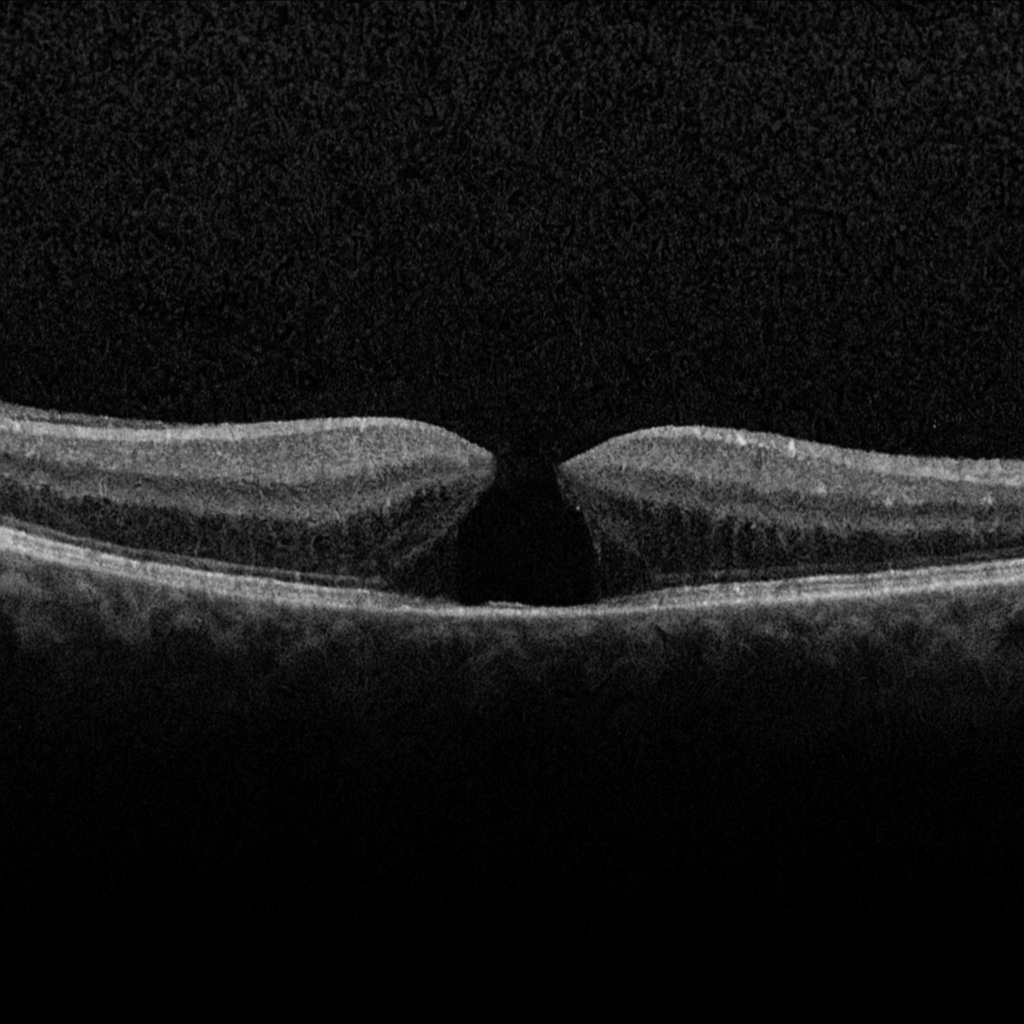
About Macular Holes
A macular hole is a small break in the macula, the central part of the retina responsible for sharp, detailed vision. When a hole forms, central vision becomes blurred or distorted.
Frequently Asked Questions
What causes a macular hole?
The most common cause is age-related changes in the vitreous gel inside the eye. As the vitreous pulls away from the retina, it can tug on the macula and create a hole. Other causes include:
Eye trauma
High myopia (nearsightedness)
Retinal detachment
What symptoms does a macular hole cause?
Patients often notice:
Blurred or hazy central vision
Distortion (straight lines may look bent or wavy)
A dark or missing spot in the center of vision
Difficulty reading or recognizing faces
Note: Side (peripheral) vision usually remains normal.
Is a macular hole the same as macular degeneration?
No. They are different conditions, though both affect the macula. A macular hole is a physical break in the macula, while macular degeneration involves damage from thinning, deposits, or abnormal blood vessels.
What treatments are available?
The main treatment is vitrectomy surgery with membrane peel and gas bubble placement. During surgery:
The vitreous gel is removed
A fine membrane on the retina is peeled away to relieve traction
A gas bubble is placed inside the eye to help the hole close
What happens after surgery?
Patients may be asked to maintain face-down positioning for 2-3 days so the bubble presses against the hole to close it.
The gas bubble gradually dissolves over few weeks
Vision usually improves as the hole closes, but final results may take several months.
How successful is surgery?
Surgery successfully closes macular holes in over 90% of cases.
Vision improvement depends on the size and duration of the hole — earlier treatment leads to better results.
Some distortion may remain even after the hole closes.
Can I fly or travel after surgery?
You cannot fly or travel to high altitude while the gas bubble is still in your eye, as pressure changes can be dangerous. Your retina specialist will let you know when it’s safe.